Why Project Management?
PROJECT MANAGEMENT: YES, BUT WHY?
Many of our clients ask us to explain the line item for project tracking in estimates because they don't understand its purpose. Yet, it's considered the central element for successful project execution. It's the basis for planning and cost estimation and aims to achieve the level of quality desired by the client.
If, like our clients, you're wondering about the usefulness and benefits of project management, we invite you to discover what this mysterious line item on your quotes actually means!
What is the purpose of project management?
Project management aims to organize the entire project lifecycle for its successful execution. It uses organizational techniques throughout the project's lifecycle with the sole purpose of achieving the objectives set at the outset.
To work effectively and achieve a certain level of quality, we can distinguish different stages in project management:
1. Communication with clients and partners:
Once the contract is signed, the project manager's role is to act as the interface between the client and the agency. They will ensure effective communication between the different parties. Their main task is to gather information from the client (needs, content, deliverables, etc.) and transmit it to the dedicated teams. And vice versa, of course!
Project management calls upon other skills and requires listening, comprehension, rewriting, and even translation skills when the requests are highly technical.
The project manager often has their phone glued to their ear and their email at their fingertips to stay constantly connected with their client and teams!
2. Project scoping:
During the launch phase, it is essential to conduct a scoping phase. This phase will review the client's request, their constraints, and their specifications. At this same time, we define the project's broad outlines and determine its key milestones.
The project manager will break down the various tasks that make up the project to determine their interdependencies and the order in which they must be executed.
3. Project and Resource Planning:
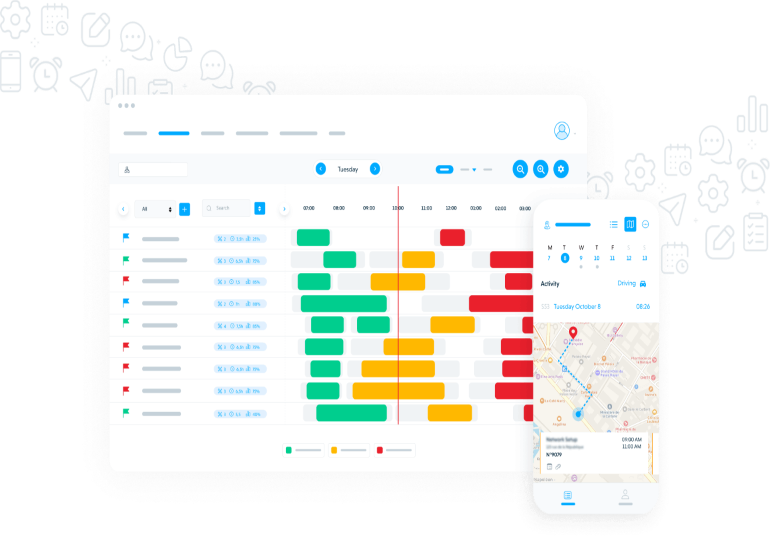
Once the framework is established, the project can begin. With the primary objective of meeting client deadlines, a production schedule will be developed. This schedule is based on both client needs and the necessary resources.
This crucial and mandatory step can sometimes be complex: managing teams, schedules, and unforeseen events can quickly become a headache. If this step is poorly executed, the entire project suffers!
4. Internal and External Resource Management:
Once the project is planned and resources are allocated, it is the project manager's responsibility to manage the teams and ensure that each objective is met.
They oversee various elements to ensure that all project phases are successfully completed:
conducting an initial briefing with the entire project team;
regularly monitoring and controlling the various tasks;
anticipating potential problems and developing solutions to address them;
adapting schedules and/or resources;
building cohesion within the project team…
All these tasks contribute to the smooth execution of the project.
5. Time Management:
Project management also means managing deadlines!
Following the estimates prepared by the production teams, the project manager plans the necessary time and must ensure that these deadlines are met to deliver the final product on schedule.
The teams therefore have the schedule to follow, and the project manager ensures that the phases are completed.
Project management, which regularly requires adjustments, demonstrates its ability to quickly find solutions. In other words, if you're a project manager, you're a skilled juggler!
6. Deliverable Validation:
A crucial step in the smooth execution of a project is a thorough verification of the deliverable. The project manager is responsible for the elements or materials sent to clients.
Regardless of the final deliverable, a check-in is mandatory to ensure that the output conforms to the specifications and the initially defined objectives.
Validation requires a great deal of rigor, patience, and sometimes even technical expertise. Ultimately, project managers are very versatile!
In conclusion, to succeed in a project, it must be properly organized and monitored. A project cannot be completed effectively without effective project management. Comparatively, it's a bit like a vacation! You study and plan the best route, you research must-see sights along the way, you plan your food, and sometimes even games to entertain the children.
Well, it's the same with communication projects! We plan, we anticipate, we schedule so that your projects run smoothly and your objectives are met!
Discover ManagTech, Project Portfolio Software adapted for PMOs















































































































 January 25, 2026 - BY Admin