












































































































 January 25, 2026 - BY Admin
What must appear on an invoice?
What are the rules regarding the invoice format?
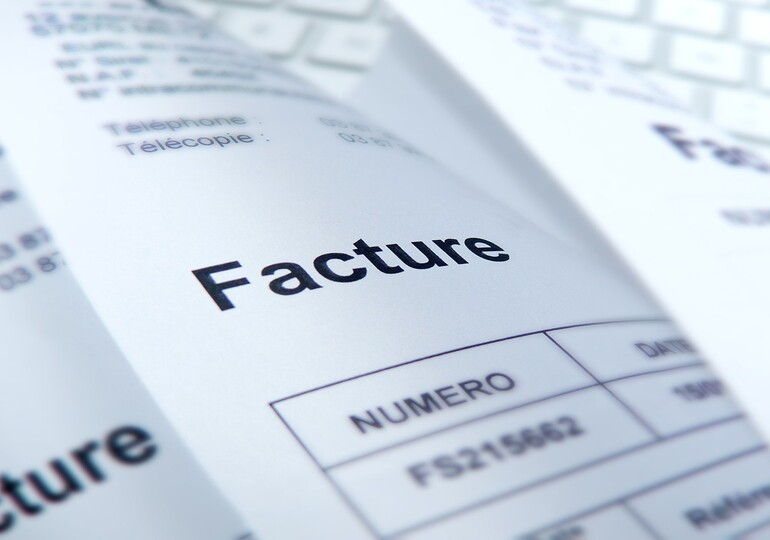
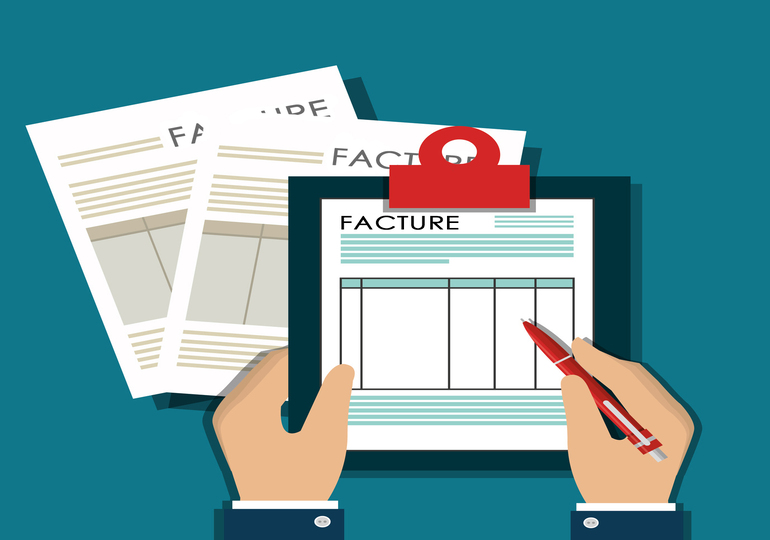
An invoice is a detailed statement of services provided or goods sold. It must comply with several formal requirements:
-
Be written in French
-
Be issued in two copies, with the original given to the customer
-
Include a set of mandatory details listed below
Invoices in a foreign currency or language
A company established in France may, under certain conditions:
-
Issue invoices in a foreign currency, provided the currency is internationally recognized and convertible (e.g., US dollar, pound sterling), and that accounting records are converted back into euros
-
Issue invoices in a foreign language (in this case, the tax authorities may require a certified translation by a sworn translator for audit purposes)
Mandatory information on invoices
Invoice date
The date on which the invoice is issued must be stated.
Invoice number
A unique invoice number based on a continuous chronological sequence. No gaps are allowed, as invoices cannot be deleted. Separate numbering series (e.g., by year) are permitted if justified.
Date of sale or service provision
The date on which the goods were delivered or the service was performed or completed.
Seller or service provider identification
The invoice must include:
-
Company name (or full name for a sole trader)
-
Registered office address and billing address (if different)
-
SIREN or SIRET number, NAF code, legal form, and share capital (for companies)
-
Trade register number (RCS) and registration court city (for merchants)
-
Trade directory number and registration department (for artisans)
Buyer or customer identification
-
Company name (or name for an individual)
-
Customer address (unless opposed by an individual)
-
Billing address and delivery address, if different
Purchase order number
Only if a purchase order was issued beforehand by the buyer.
VAT identification number
The VAT number of the seller and the professional customer (only if the latter is liable for VAT).
Not required for invoices with a net amount ≤ €150.
Description and breakdown of goods or services
-
Nature, brand, and reference of goods
-
Materials supplied and labor performed (for services)
-
Precise description, quantity, unit price excluding VAT, applicable VAT rate
-
Any discounts, rebates, or reductions
Catalogue price
Unit price excluding VAT for goods or hourly rate excluding VAT for services.
Applicable VAT rate
If multiple VAT rates apply, they must be clearly shown line by line.
Price reductions
Any discounts, rebates, or allowances granted at the date of sale or service (excluding early-payment discounts not shown on the invoice).
Total amount payable
-
Total excluding VAT (HT)
-
Total including VAT (TTC)
Billing address
Only if different from the registered office address.
Payment information
Must include:
-
Payment due date or payment terms
-
Early payment discount conditions (if any)
-
Late payment penalties and the fixed recovery fee (€40)
Legal warranty of conformity
Since 1 July 2021, invoices must state the existence and duration (minimum two years) of the legal warranty of conformity for certain goods, as defined by Decree No. 2021-609 of 18 May 2021.
This does not apply to goods sold under distance or off-premises contracts.
Specific mandatory mentions (depending on the situation)
-
Member of an approved management association:
“Member of an approved association; payment by cheque and bank card accepted.” -
VAT exemption (small business scheme):
“VAT not applicable, Article 293B of the French General Tax Code.” -
VAT reverse charge (self-assessment):
“VAT reverse-charged” and indication that the amount is excluding VAT. -
Artisans or micro-entrepreneurs subject to mandatory professional insurance:
Details of the insurance policy covering the activity.
Electronic invoices: how do they work?
Invoices may be issued electronically provided the buyer agrees. The content must be identical to a paper invoice, with the same mandatory details.
-
Since 1 January 2020, electronic invoicing is mandatory for public contracts.
-
Electronic invoicing between VAT-registered businesses will be progressively mandatory from 2024 to 2026.
Penalties for non-compliance
Failure to comply with invoicing rules may result in:
-
A tax fine of €15 per missing or incorrect item, capped at 25% of the invoice amount
-
An administrative fine of €75,000 for individuals and €375,000 for legal entities (doubled in case of repeat offenses within two years)
Invoice retention period
Invoices must be kept for 10 years as accounting records, in paper or electronic format.