In our society, accounting principles follow precise rules defined by a legal framework. Business practices and administrative obligations fully incorporate these accounting rules and rely on the established and current legal framework. Yet, these rules are sometimes perceived as rigid constraints stemming from a system that is not always well understood. Indeed, we often quickly forget what accounting actually is and its original purpose. As a result, we too readily overlook the intrinsic necessity of accounting principles. Why implement accounting in a business? What is the fundamental objective of accounting? This article explains the ultimate purpose of applying accounting by exploring the initial objectives behind establishing accounting principles.
The Core Objectives of Accounting
A company’s accountant is a key professional on whom the business relies heavily. Historically, accounting is one of the oldest professions—some even call it “the world’s oldest profession.” At its core, accounting emerged to address critical needs.
Representing Economic Reality
Accounting is simply a universally recognized language designed to communicate financial reality. The communication rules are mandated and governed by legislation. These standardized reporting practices are accepted by all stakeholders and information recipients. Financial statements—such as the balance sheet, income statement, and cash flow statement—are concrete applications of accounting’s core objectives.
Accounting aims to present, as faithfully as possible, the economic reality of a business—including its financial capacity, operations, position, and results. It provides a real-time snapshot of the company’s financial health. In essence, through its principles, accounting serves as a comprehensive information tool.
The Role of Accounting: Essential Consequences
The fundamental purpose of accounting is to serve as a common language that accurately conveys a company’s financial and economic reality. This foundational role leads to equally essential consequences, which shape accounting practices and establish it as a vital management tool for businesses.
Harmonizing Corporate Rights and Obligations
Communicating financial realities using universally accepted rules enables consistent calculation of various taxes and duties, such as Value Added Tax (VAT), Business Property Tax (CFE), Business Value-Added Contribution (CVAE), Corporate Income Tax (CIT), and others. Government grants or subsidies can also be calculated when tied to specific business activities or financial situations.
At the national level, accounting and its principles enable the production of economic statistics that governments use to design taxation frameworks and inform policy decisions.
Managing Economic Activity
Thanks to its focus on communicating financial reality, accounting provides businesses with a reliable management tool. Management accounting, in particular, becomes a powerful instrument for analyzing business performance and guiding strategic decision-making. Accounting thus evolves into an essential financial analysis and decision-support tool (through intermediate management balances), a management instrument (via cost analysis and managerial accounting data), and a forecasting mechanism. It is a cornerstone for making informed choices throughout a company’s lifecycle.
Assessing Business Viability
Accounting and its principles effectively analyze a company’s operational patterns. They provide a critical foundation for evaluating whether a business can remain viable and sustainable over time. By imposing a uniform reporting framework across all market participants, accounting delivers reliable benchmarks for comparison and future projection.
Justifying Business Activities
Accounting officially records all transactions conducted as part of business operations. It thus serves as a legal justification tool in disputes between parties or with government authorities. A company’s rights are closely tied to compliance with accounting principles.
Regardless of size, sector, or structure, every business must operate according to essential accounting principles. Accounting captures the financial reality of operations by recording transactions and documenting how the business functions. It bears witness to a company’s viability, efforts, and future potential. Accounting principles enable all societal stakeholders to communicate using the same language.
Gain Clear Financial Visibility to Make Better Decisions
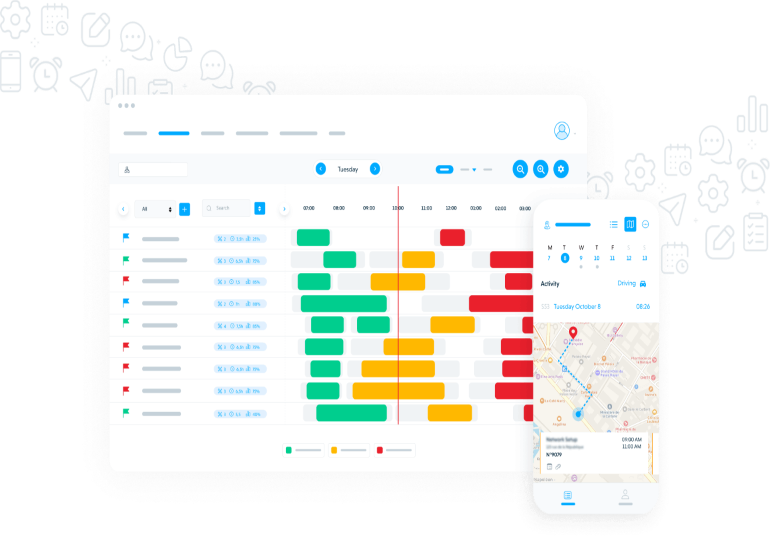
ManagTech is a software solution offering ready-to-use project management features that cover the entire project portfolio lifecycle.

Accounting Management Software
Choosing ManagTech accounting software means adopting the best technology to closely monitor all your financial operations—from transaction recording to your company’s balance sheet—as well as invoice management, tax declarations, and everything related to fiscal and accounting compliance.





















































































































 January 25, 2026 - BY Admin