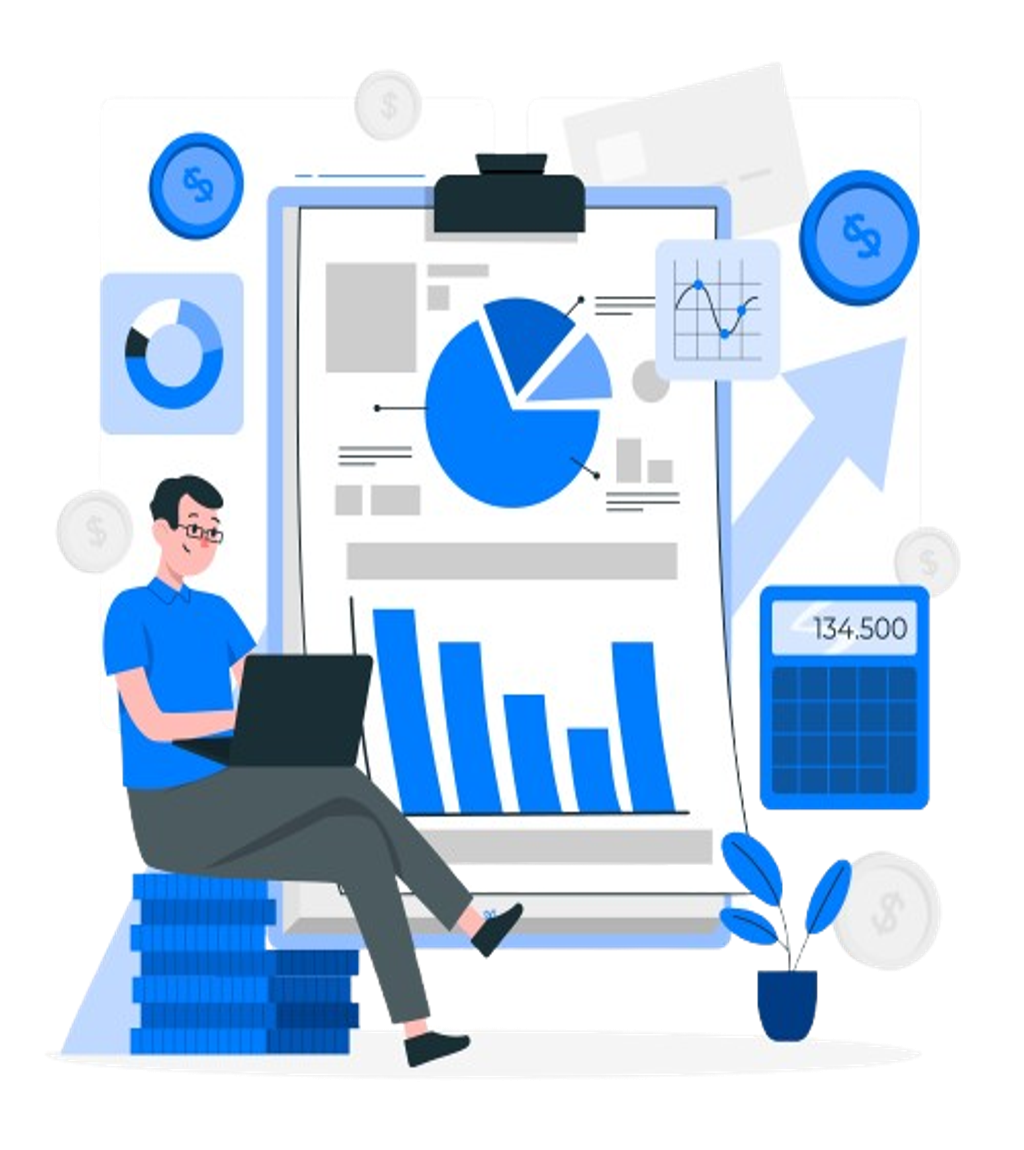
Management accounting is an internal operational accounting system used within a company. Its purpose is to inform managers about the costs and profitability of a service or product.
Formerly known as analytical accounting, management accounting is an optional—but extremely valuable—tool for businesses. Learn more about accounting.
Indeed, management accounting is one of the two main categories of business accounting:
- Financial accounting: intended for external stakeholders
- Management accounting: used for internal analysis
While maintaining management accounting is not mandatory (unlike financial accounting), it is highly beneficial for understanding costs and analyzing profitability.
These two types of accounting are complementary: the data used in management accounting primarily comes from financial accounting.
What Are the Objectives of Management Accounting?
It primarily serves as a performance and profitability indicator. Once data is properly analyzed, executives and managers gain precise insight into the costs associated with:
- A specific activity;
- A team of employees;
- A particular department or service.
They can also calculate the average revenue contribution per customer.
In broad terms, this accounting method enables companies to
determine product pricing based on a detailed cost analysis.
It also provides audit trails to optimize resource allocation and supports:
- Inventory management;
- The creation of forecast reports.
The methodology used plays a crucial role in any accounting recording process.
Regarding management accounting, professionals typically use one of the five overhead costing methods outlined below.
Variable Costing Method
Using this method, the accountant only considers costs directly tied to revenue-generating activities. The goal is to determine the company’s break-even point.
Since this approach excludes certain costs, the resulting data only partially reflects the true financial viability of operations.
Full Costing Method
With this method, the manager compares total production costs to their full cost price to determine the optimal selling price for each product. This approach also enables analysis of how different departments operate.
To do so, the company must be divided into distinct production units, and the cost incurred and revenue generated by each unit must be evaluated separately.
Direct Costing Method
This method was designed to address the main limitation of variable costing by including all costs—especially fixed costs that do not fluctuate with market demand.
By factoring in fixed costs, users can estimate the break-even point more accurately. However, the calculations become significantly more complex.
ABC Method (Activity-Based Costing)
The ABC method follows the same principle as full costing but focuses on breaking down the production process into individual tasks and activities rather than products or services.
This granular breakdown allows for more precise cost analysis and better decision-making. However, this approach is more challenging to implement in practice.
Standard Costing Method
This method involves estimating costs before production begins. Actual costs are then calculated with precision after production.
By comparing estimates with actual expenses, companies can:
- Prepare accurate budgets;
- Continuously improve the accuracy of forecasts.
This approach is particularly useful for businesses with large product portfolios.
What Is the Difference Between Financial Accounting and Management Accounting?
Financial accounting is primarily a legal requirement for most businesses. It enables shareholders, partners, and third parties to assess the company’s financial health, as businesses are generally required to publish annual financial statements.
In contrast, management accounting is initiated voluntarily by company leaders. Its records focus exclusively on internal operations and are used solely as decision-making tools for managers. Since no legal framework mandates a specific format, companies are free to adopt any of the methods described above.
Implementing management accounting is recommended for any business. The insights gained help leaders choose the best strategy to grow their operations and significantly reduce bankruptcy risk by ensuring coherent, data-driven decisions.
However, adopting this practice is not trivial. While it’s difficult—but not impossible—to find essential resources online, such as free accounting software (e.g.,
free accounting software guides
), companies may also engage an experienced accounting firm to manage this function.
Key Characteristics
Generally, this accounting approach focuses on costs to:
- Analyze the profitability of a product or service;
- Evaluate team performance.
To achieve this, companies analyze various cost types, including:
- Direct costs;
- Indirect costs;
- Fixed costs;
- Variable costs.
Direct costs (vs. indirect costs) are directly tied to producing goods or services. Fixed costs (vs. variable costs) remain constant regardless of activity levels.
Benefits
Management accounting enables companies to:
- Calculate the true cost of business activities;
- Set product prices to reach break-even or target margins;
- Generate more accurate forecasts;
- Plan investments more effectively;
- Develop more precise budgets;
- Assess management quality and team performance.
Gain precise financial visibility to make better decisions
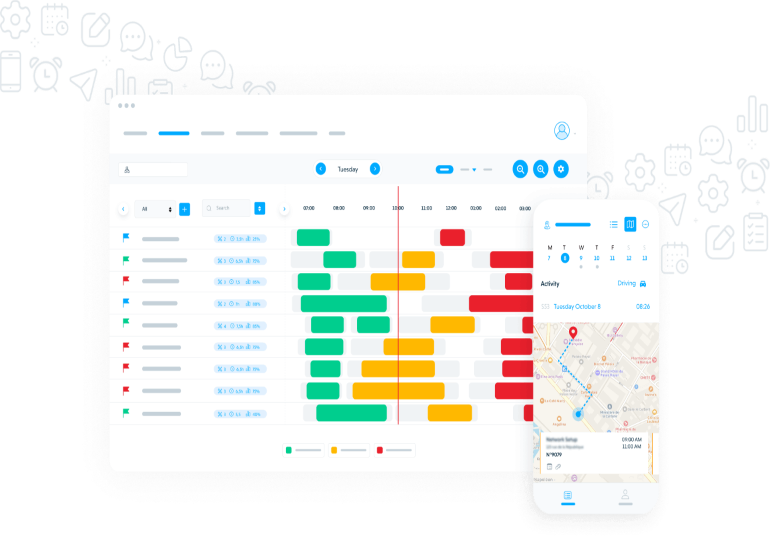
ManagTech is a ready-to-use project management software suite that covers the entire project portfolio lifecycle.

The accounting management software.
Choosing ManagTech’s accounting software means opting for the best technology to closely monitor all your financial operations—from transaction recording to balance sheet preparation—including invoice management, tax filings, and everything related to fiscal and accounting compliance.

















































































 January 25, 2026 - BY Admin