What are the project management techniques?
Project Management Techniques
Project Management Activities
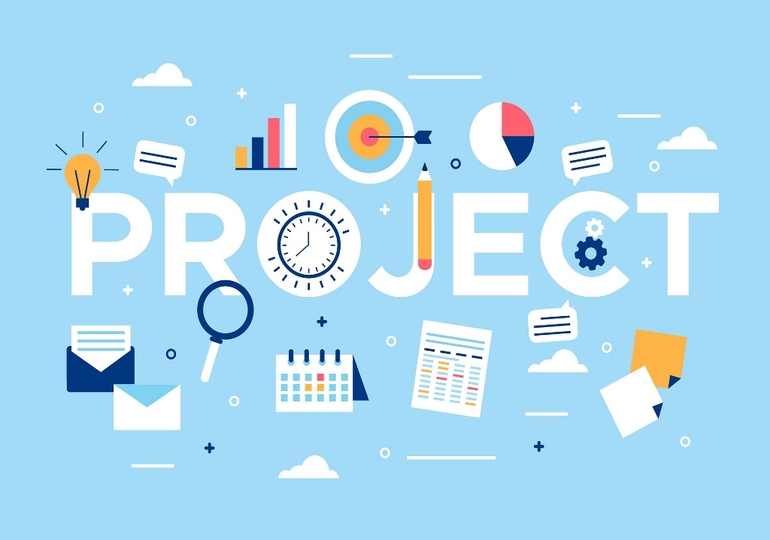
Project management requires the following process groups: initiation, planning, implementation (i.e., carrying out the project), control (i.e., supervision and monitoring), and closure (i.e., completion). These process groups are not sequential phases of the project, but rather correspond to activities that can be applied throughout the entire lifecycle. Thus, if, for example, planning takes place at the beginning of the project, it may be limited to the broad outlines and accompanied by planning by phase, or even by work package.
Generally speaking, the activities prior to deciding to initiate a project may include the following:
establishing a business plan through a thorough analysis of the contract. This is a preliminary feasibility study, also known as a business case, which explains the rationale for undertaking the project.
This allows for the creation of an opportunity assessment, demonstrating how the project aligns with the strategy defined by management.
It also involves defining a business model and identifying risks associated with the business and the project before it is launched.
Once the project is approved, the activities include:
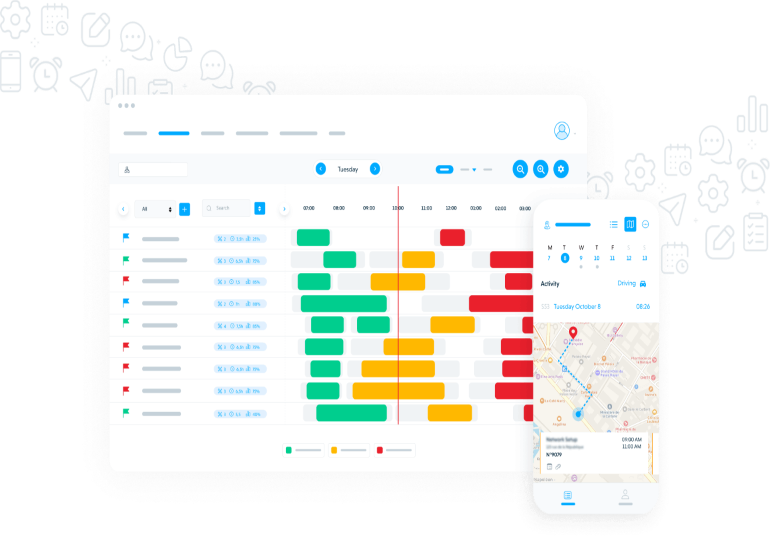
planning the project timeline, sequencing tasks, and monitoring progress;
estimating costs and tracking the budget (preliminary study of costs and expected benefits or revenues, sources of funding, and analysis of project, operational, and financial risks and impacts);
managing and mitigating risks;
achieving the desired level of quality;
monitoring significant operational and financial issues; and
organizing the necessary contract amendments to accommodate change requests. From the project's inception, it is essential to implement the various tools (dashboard, risk management, planning, project review, etc.) necessary to manage the project throughout its entire lifecycle, ensuring its success or recommending its potential cancellation.
Milestone Techniques
Milestones involve identifying or defining one or more milestones for each stage, representing the project's progress. This allows for a well-structured project timeline, providing assurances to the project owner. It facilitates monitoring the schedule and progress of the work. The review and audit plan organizes the measurement of progress and quality.
Milestones allow for tracking the project's progress. They can serve as control points (project gates) and determine the commencement of the next phase. The decisions made during this phase transition review are stable elements upon which the rest of the project can be built. Milestones are less concerned with the content of each phase than with evaluating its outcome, where the client (or project owner) is asked to provide feedback.
Milestones depend on the project lifecycle, for example:
Preliminary phase: reflection on the project's intrinsic value, in terms of strategic opportunity, based on future prospects.
Project launch milestone: company management decides whether to launch a specific project (justified by an expected return on investment, a regulatory requirement, etc.). They then appoint a manager, a project leader, and a team. They also allocate a budget and resources.
Requirements definition phase: defining what is expected (the expected functions), the scope, the criteria for evaluating the project, what is important, and what is less so.
Needs validation milestone: The client validates the expression of their needs (this allows for tracking changes in the needs assessment and justifies any necessary adjustments to the project plan). This forms the basis upon which the project will be built.
Feasibility phase: The study of what is technically and economically feasible. This involves consulting potential contractors and comparing their technical and financial proposals.
Solution selection milestone: The contract is signed, specifying what will be done and how it will be done.
Design phase: The project manager coordinates the work on the "paper product," defining every detail down to the last bolt.
Construction launch milestone (if applicable): Once the "paper product" is sufficiently defined, a review can be conducted before construction begins.
Implementation phase: Construction begins, and work progresses to translate the "paper product" into reality. Verification phase (which can start very early, on the "paper product"): on the actual product or on the paper product, we verify (or calculate) that the expected characteristics











































































































 January 25, 2026 - BY Admin