A warehouse is a facility that—using storage equipment, material handling machinery, human resources, and management systems—manages the discrepancies between inbound flows (from suppliers, manufacturing sites, etc.) and outbound flows (goods destined for production, sales, etc.). These flows are typically uncoordinated, necessitating an optimized storage logistics strategy.
A company’s business activities may sometimes require one or more types of warehouses—for raw materials, semi-finished goods, finished products, etc. All these warehouses must be designed according to their specific operational needs and in compliance with the constraints or opportunities of each location and its surrounding environment.
The best way to classify these different warehouse types is to group them by shared characteristics.
The main operations carried out in a warehouse include:
Numerous factors must be considered when designing a warehouse project, but the essential elements are: the products to be stored, the material or goods flow, the available space for storage, the storage equipment (racking and handling machinery), human factors (staff), the management system, and the company’s overall policy.
Based on these elements, detailed data must be collected (as outlined below), which will in turn influence various aspects of the facility and must be accounted for during its development.
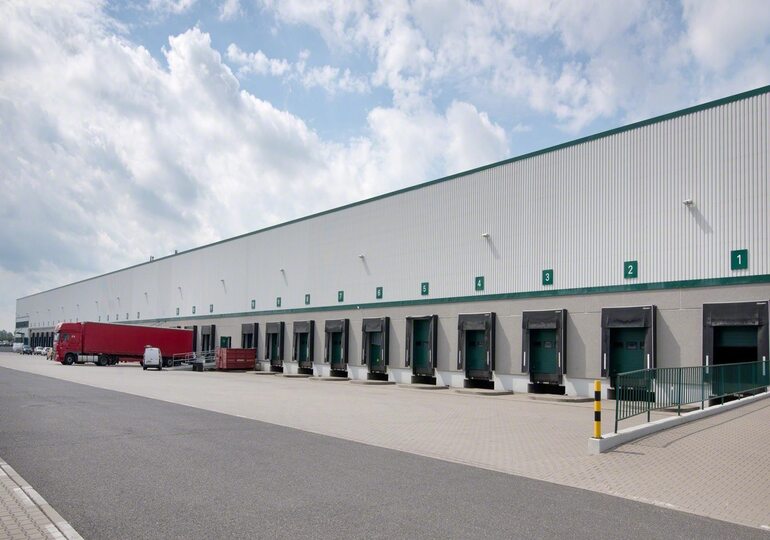
Even the most basic warehouse typically includes access doors, a clear area for vehicle maneuvering and inspections, a dedicated storage zone for goods, a control office, and restrooms and locker rooms for staff.
A warehouse may also be divided into sectors based on the type of product handled or operational methods. The following figure illustrates an example of such an organization:
1. Administrative and support offices
2. Loading and unloading docks
3. Receiving and inspection area
4. Shipping area
5. Racking for high-turnover or bulky items
6. Picking area for high-turnover palletized goods
7. Racking for irregularly shaped products
8. Automated storage for medium-turnover components
9. Racking for high-turnover components
10. Racking for low-turnover components
11. Racking for high-value products
12. Packing and consolidation area
Warehouse dedicated to refrigerated and frozen food logistics.
The space allocated to each zone must be adapted to the site or building dimensions, desired capacity, required operations, staffing and equipment needs, material flow, and future growth potential.
In each case, the suitability of the design and the layout of zones within the facility are determined by a thorough analysis of the company’s needs—based on the questions previously outlined—as well as the supplier’s experience in implementing logistics and storage solutions.
The entire building—including its floor plan, contents, and access points—must be tailored to the client’s specific requirements and potential growth projections. A warehouse that is overly tight with no room for expansion is a mistake, unless it is intended as a temporary facility.















































































































 January 25, 2026 - BY Admin