Invoice management is very important for a company in its dealings with customers. An invoice formalizes the financial transaction related to a sale or a service provided, and it serves as supporting documentation for accounting and tax purposes.
Le Coin des Entrepreneurs offers a practical guide on company invoice management, covering the following topics:
Rules to be respected in invoicing
Organization of invoicing
Use of software to manage invoicing
Invoice management is regulated by law at several levels, notably regarding the obligation to issue invoices, the date invoices must be issued, the format to be used, invoicing software requirements (since 2018), mandatory invoice details, and invoice retention.
First of all, professionals are subject to an obligation to invoice. Invoicing is mandatory:
For any purchase of goods or provision of services carried out for professional purposes
For distance sales
For auction sales of second-hand goods, works of art, collectibles, or antiques
For services provided to private individuals where the total amount (including tax) is at least €25, or when the individual requests an invoice
For sales made to private individuals who request an invoice
If necessary, invoicing may be subcontracted by mandating another person to issue invoices on your behalf and for your account.
Regarding the date on which an invoice must be issued, the applicable rules are:
For sales: the invoice is generally issued upon acceptance of the order or upon delivery if it occurs later
For services: the invoice is generally issued on the day the service is completed
Invoices must be issued in at least two copies: one provided to the customer and one retained by the company.
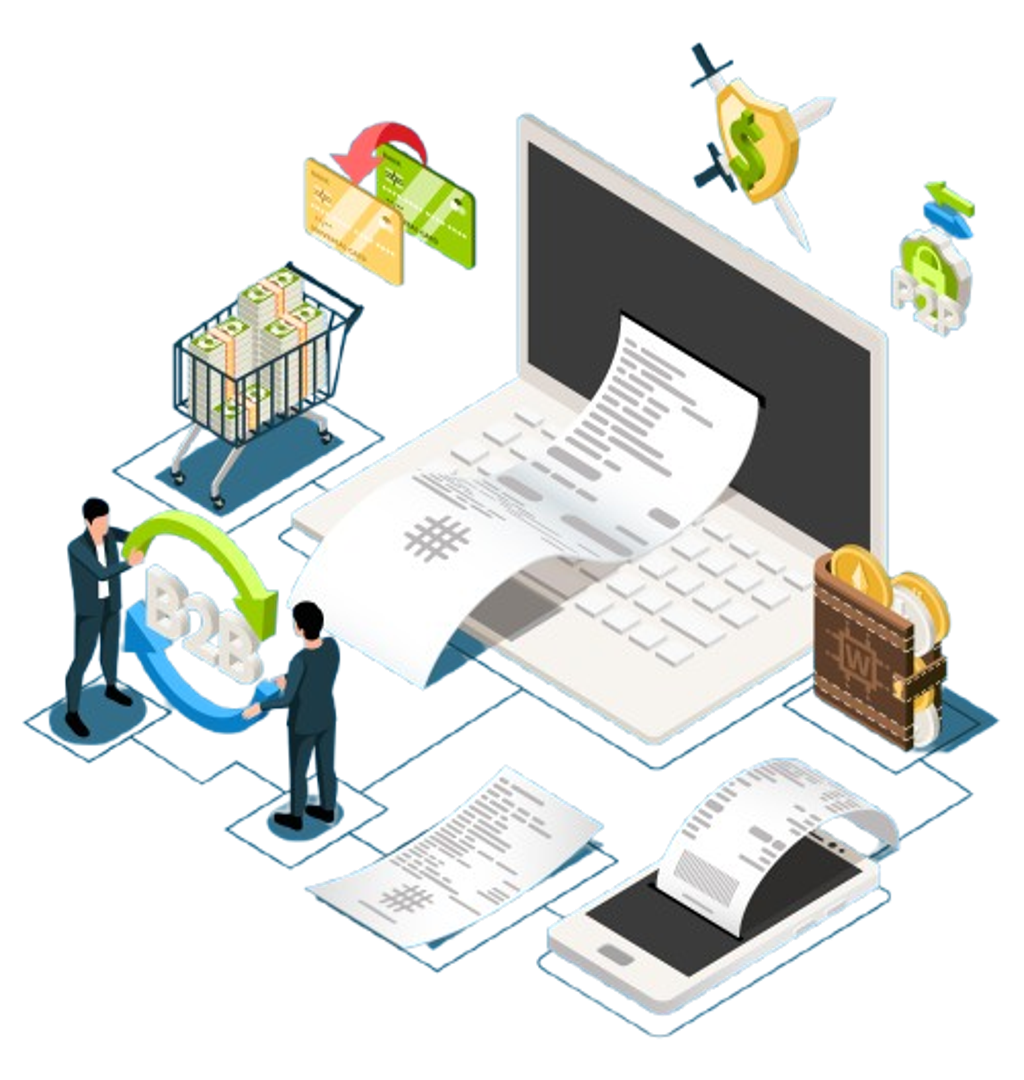
Invoices may be issued in paper or electronic format. The tax authorities allow electronic invoicing provided one of the following methods is used:
Use of an electronic signature
Use of electronic data interchange (EDI) to transmit invoices
Use of a technical solution other than electronic signature or paper format, provided that documented and permanent controls are implemented to establish a reliable audit trail between the issued or received invoice and the delivery of goods or services on which it is based
In addition, tax authorities accept that a paper invoice which is then scanned, sent, and received electronically may be considered an electronic invoice. An electronic signature must secure the scanned invoice, and the original paper invoice must still be retained.
Invoices issued as part of professional activity must include several mandatory details. Each missing item may result in a fine and potential criminal penalties.
A full list of required information is detailed in the guide on mandatory invoice details.
From January 1, 2018, invoices must be issued using invoicing software that meets requirements for data integrity, security, storage, and archiving. Compliance must be certified either by an accredited body or through an individual attestation issued by the software publisher.
The rules for retaining invoices are as follows:
Law 2008-561 states that obligations arising from commercial transactions between merchants, or between merchants and non-merchants, are subject to a limitation period of 5 years
For accounting purposes, invoices must be retained for 10 years, as they are supporting documents
For tax purposes, invoices must be retained for at least 6 years from the date of issuance
Specific regulations also apply to the electronic archiving of invoices. Further details are provided in the guide on invoice retention.


























































































 January 25, 2026 - BY Admin